
THE DEATH OF STRENGTH
Guest post by Tokyo-based writer, publisher and editor Joy Waller (1 of 4 guest posts in May)
The first springtime in Tokyo after the Apocalypse is exquisite, kind of.
The cherry blossoms are extinct; nothing can change that, yet beautiful replicas have been spray-painted onto the concrete walls of the remaining skyscrapers.
There is cappuccino in a chipped pink mug, sipped reverently in the wreckage of a trendy café in Omotesando.
Sunlight blooms soft and buttery, like daffodils splayed across the sky.
Weeds flourish and overtake the cracks in the streets. Communities of wild foxes and tanuki set up camp in abandoned convenience stores. Millions of surviving salarymen and office ladies shed their corporate attire and hold hedonistic dance parties in the parking lots.
There are no more cars.
There is a sense of resilience in the charred remains of this city.
But not in me.
Every morning, I awaken in the crumbling remains of my apartment and feel my pulse has become a little frailer.
I tap my wrist lightly with a finger. I tap my cheekbones, the tip of my nose. All of me is still here. But the energy just under my skin seems faded.
There is a disconnect between the bustling renaissance of a city rising from the ashes and the sudden blossoming of the weakness within me.
I’ve never felt weak before. Not particularly. Is this post-traumatic stress? But the Apocalypse had been fun, in a way. Almost everybody I knew had died, but it had been exhilarating to see centuries of routines & rat races & corporate insanities come crashing down. I’d felt excited. Like this would be a rebirth.
In the early days, I try to summon my strength in the same way I would a demon or an angel. I cleanse the altar by the east window of my apartment, first with sage smoke and then with the delicate ting of a tuning fork stuck against a chuck of clear quartz.
I dress scarlet candles in rosemary oil, symbolizing fortitude.
Sprinkle salt in a neat circle around the room.
Light a stick of dragon’s blood incense.
Recite a brief incantation from my handwritten Book of Shadows and then wait on my knees by the window, bathed in moonlight, for my strength to return.
Weeks I wait for this.
But nothing.
I begin to suspect the weakness is in my own mind. Before long it seems logical to fetishize classic paintings of aristocratic women limp and forlorn on their chaise lounges. I break into the Mori Arts Center Gallery in Roppongi and steal some of the larger canvases, drag them home to my destroyed apartment and prop them against one of the remaining walls. It makes me feel less alone. But my strength does not return.
April transforms into May. The cherry blossom graffiti is replaced with vibrant murals of azaleas and wisteria.
I expand my search for an antidote outward, visiting personal urban power spots that had healed me in the past:
The Kanda River, with its aching magick hovering inches above the flowing water
The narrow alleyway by the train tracks in Ikenoue, where crumbling stepping stones seep into the night as though leading to Wonderland
The derelict shrine in Kabukicho, with its erotic holographs & lovers for hire
I haunt the old coffee shop in Shimokitazawa because I know the ghosts of respected writers hold afternoon salons there. And it’s true: Anais Nin is perched on a stool by the counter like a tiny powerful bird, eyes wide and kohl-rimmed; Jack Kerouac and Sylvia Plath smoke restlessly at a scuffed table by the window, oozing chemistry at each other over their cigarettes; Osamu Dazai and Kenzaburo Oe pick at delicate egg salad sandwiches and look at me intensely but do not speak. Do not give me any messages. Do not fortify me.
I turn to the occult techno-shamans who populate the subterranean rave warehouses of East Shinjuku. They whisper life-altering drum & base lullabies into my ear, and I writhe in ecstasy, feel power blazing once more in my bloodstream… But the next morning, I am more depleted than ever—more depleted than before the Apocalypse even.
It is from a cadre of stray cats encamped in the backstreets of Shibuya that I finally obtain an actionable piece of intel: “Seek Delia, the Rose Witch,” I am instructed. A scrawny black Cornish Rex with a torn ear presses a map into my fingers.
Delia, I soon find, resides at the mystic settlement that has sprung up by the old rose gardens at the east gate of Yoyogi Park.
The flowers are long gone of course—living flowers anyway—but each of the dozen or so makeshift huts arranged in a crescent moon shape near the abandoned overpass has a rose painted on its north wall.
The rose on Delia’s wall is an abstract one tinted indigo. No thorns.
I knock—such a peculiar ritual. Forceful, but simultaneously, so very mild. It’s difficult to do with my depleted strength. It feels almost violent, to announce myself so. Why am I knocking? Why am I not doing something more kind, why is there no windchime made of crystals or bamboo, why am I not gently brushing my fingers across it?
But Delia opens the door and invites me in.
Her interior is dimly lit.
Just a few thin candles flickering nervously on a mantlepiece constructed from a tower of dead TV screens.
“It was the storm,” she says. “The power went out, and these were all I could find.”
There has been no storm as far as I can detect, not for hours, and the neon billboards pulsing out prophesies are clearly visible through the window.
I guess she’s talking about another kind of storm, a different kind of power: Her hands glow in a way that suggests she has evolved somehow beyond physical definitions.
But perhaps this is a trick of the candlelight: I look down at my own hands, and they too are glowing, though not as steadily.
She gives me a glass of hot kava tea and tries to read my palm, but it is too dark inside me to see the lines.
“It feels as though you’ve been erased,” she confesses. “I know it’s just the storm. But still. Parts of you are just… not… here.”
Why hasn’t she painted thorns for the rose on her wall?
“I am searching for the strength I used to have,” I tell her. “I woke up this spring and it had vanished. I can barely move my arms higher than my waist. My feet tire on long journeys and betray me on steep staircases.”
Delia laughs, as though my concerns are absurd. “Strength—your understanding of it, at least—is nothing more than a patriarchal throw-back. Outdated. Useless.”
“But I have to be strong to survive in this,” I plead. “Half the walls in my apartment don’t exist anymore. I’m not making any money. My magick stopped working. I have to try.”
“Then try to be less ephemeral,” Delia instructs me. “Draw chalk around the outline of your body. Carve initials into your own concrete. Stick fingers deeply into yourself while still wet… Make marks. Be patient. Trust in solar activations from the sky to bake you into permanence. Never again ask someone who is not yourself—including me—how to create the neo-strength you are now called upon to initiate.”
She sends me off with a bouquet of black electric crow feathers, lit faintly in the peach tones glowing from her hands.
I tiptoe home in a trance, detouring past the old bridge by Kanda River—the magickal one, the cursed one. I hold the feathers out over the railing, a fearsome black silhouette against the midnight blue of the river.
It’s not important what happens next.
I either
a) release the feathers, or
b) continue holding the feathers
In both scenarios, I embark on the journey home feeling lighter. Not in terms of weight but of phosphorescence. The hands that had glowed in Delia’s hut are burning now, are going supernova and exploding but keeping the outlines of me intact.
I feel as though I have no thorns either, simply because, like Delia, I have forgotten to paint them on.
Back in the candlelight of my own crumbling apartment, I kneel again at my altar and attempt de-weaponize anything in me that is a hard and frozen icicle. I melt it into a pool of emotion but a neutral one, something transparent, easily pierced but then drifting back into the same shape of itself as before.
I imagine myself as a dead leaf or an abandoned plastic bag, free & empty & beautiful, devoid of circuitry or programming, in a world where my old weaknesses and old strengths no longer have any tangible meaning.

Joy Waller
is a poet, editor, manuscript consultant, and creative writing coach based in Tokyo, Japan. She currently serves as an editor at the Tokyo Poetry Journal and co-hosts the long-standing open-mic event Drunk Poets See God. She is also the co-founder of Moon Hotel Press and the co-facilitator of the Writing the City creative writing workshop series. Her fiction & poetry have appeared in numerous publications, including Best Canadian Stories 2021, and she is the author of poetry collections Pause :: Heartbeat (2019) and Cosmic Nervosa (2024).
Visit www.joywaller.com for more info.
Substack (Essays on creativity and writing inspiration): substack.com/@joyouswaller
Web site (literary, editing, and coaching services): www.joywaller.com
Instagram: instagram.com/joyous.waller
Moon Hotel Press: https://moonhotelpress.com/

LIsten to Joy on the Legends Podcast with Sarah Furuya
Joy leads us on a mystical journey through thin places, magical backstreets, tarot, mysticism, poetry, grief and death. day jobs and other jobs. (wait for the ferry story)
There are multi-swears and adult themes in this conversation so please be mindful of who you are listening with. Grandma will love it but your kids…
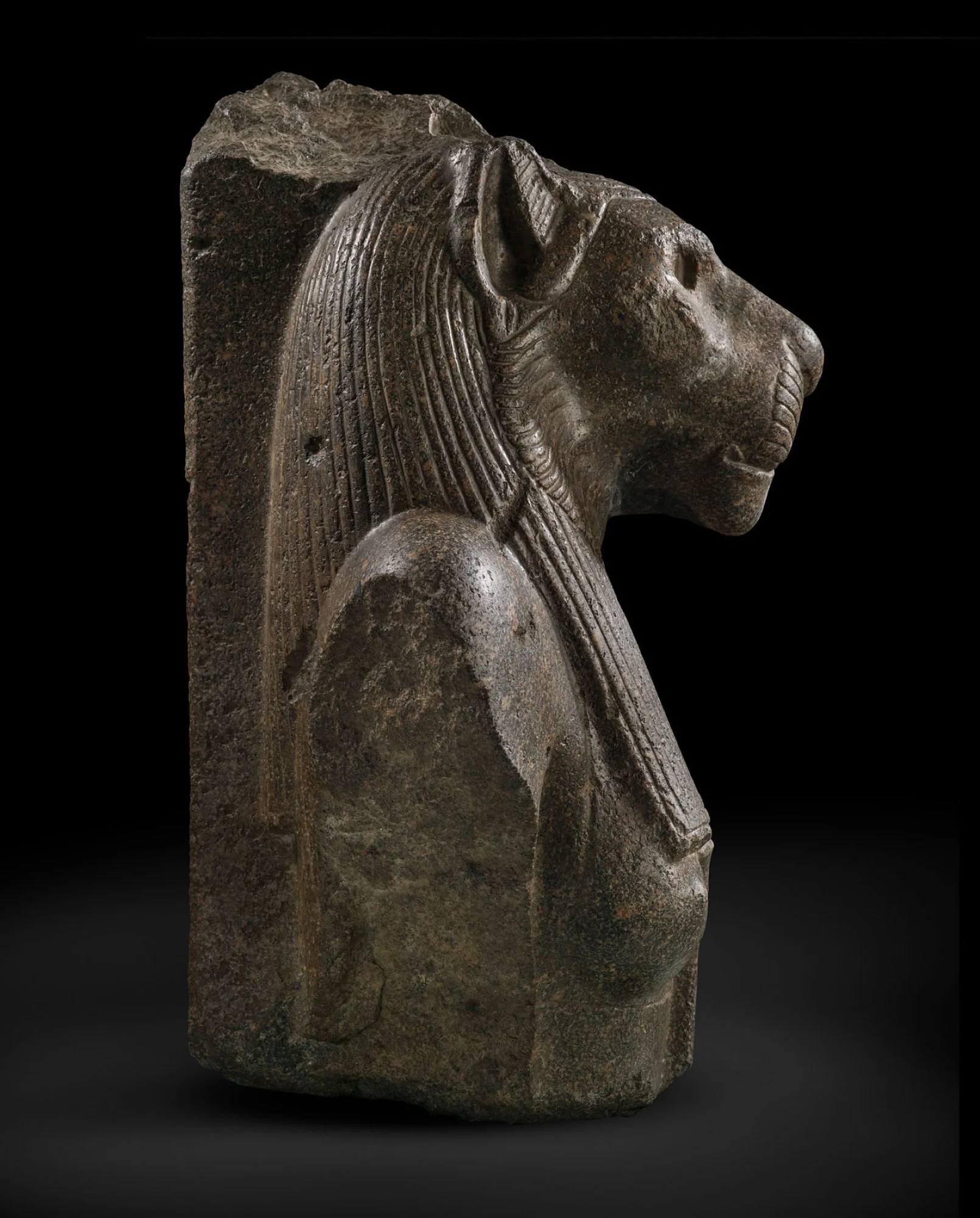
Sekhmet Egyptian Goddess associated with strength